
Solar for All-Electric and High-Usage Homes
Homes that heat with electricity, run a well pump or charge an electric car use far more power than average, and that is exactly where solar has the most to offset. More of what you buy from the utility is replaced by power from your roof, at a rate set in your agreement instead of one that rises every year.
Why high-usage homes get the most from solar
Every kilowatt-hour your panels produce is one you stop buying at your utility’s all-in rate. A home using twice the average has twice as many kilowatt-hours to replace, and usually a larger roof or lot to put panels on. The system is sized to your actual usage from your bills, not to a typical house.
Common reasons a home uses a lot of power
Electric heat and heat pumps
Baseboard heat, electric furnaces and heat pumps move a home’s heating bill onto the electric meter. Heat pumps are far more efficient than resistance heat, and pairing one with solar is one of the most effective upgrades a home can make. Heat pump + solar calculator
Well pumps
Most rural homes in Pennsylvania, upstate New York and Ohio pump their own water. The pump adds to the bill, and when the power goes out, the water goes with it. A battery sized to the well pump keeps water running in an outage. How solar batteries work
Electric vehicles
An EV driven 12,000 miles a year adds roughly 3,000 to 4,000 kilowatt-hours to a home’s annual usage. Sizing solar to cover it means charging on your own power. EV + solar calculator
Pools, workshops and outbuildings
Pool pumps, shop equipment, barns and second freezers all add up, and they often come with extra roof space on a garage or outbuilding that can carry panels.
Sizing solar for a high-usage home
- Start with 12 months of bills: heating homes use far more in winter, so the system is sized to the full year, and net metering carries summer credit into the colder months where your state allows it.
- Plan for what is coming: if you are adding a heat pump or an EV, size for it now.
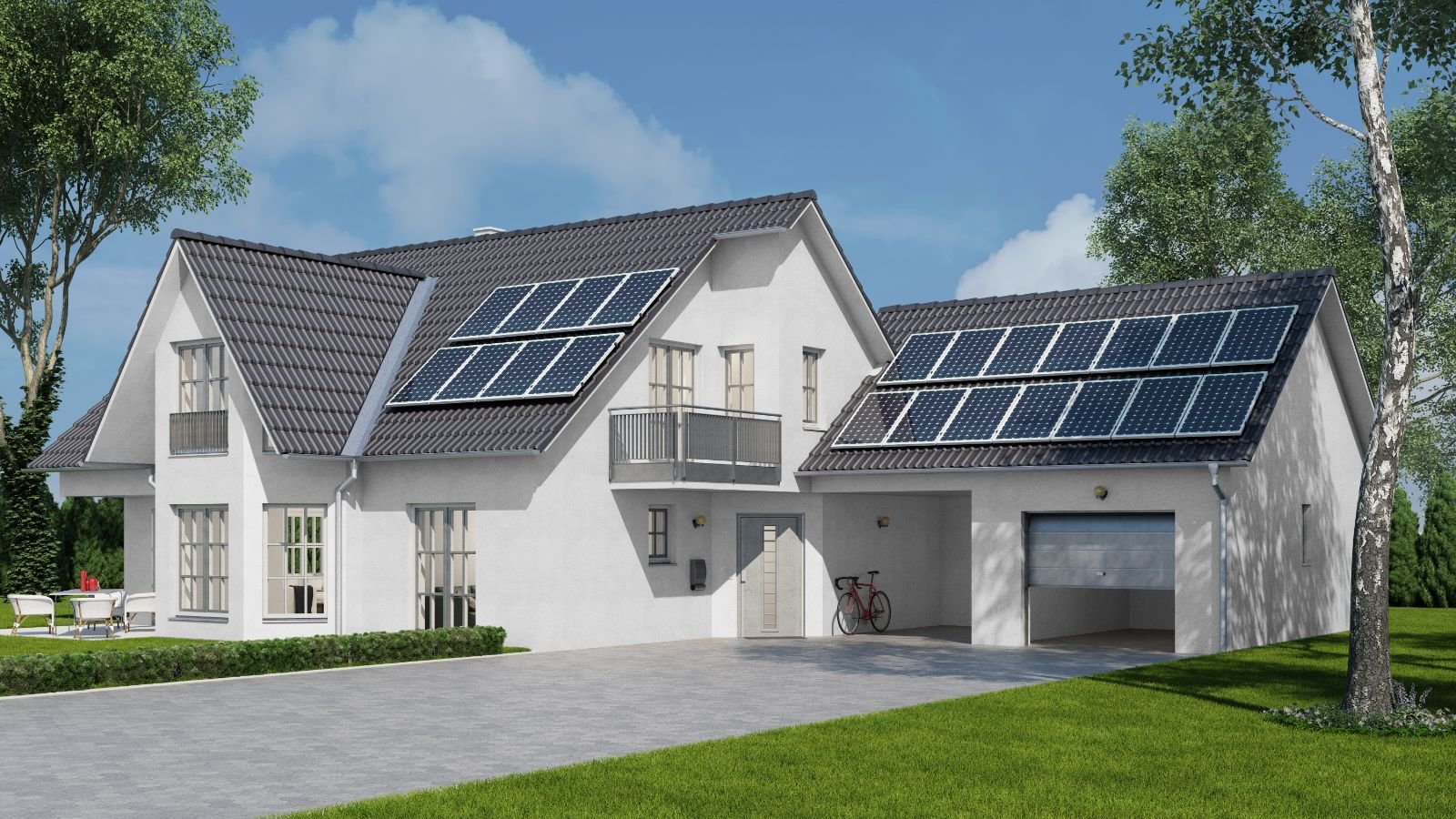
- Use every good surface: house, garage, barn or a ground mount.
- Decide what to back up: a battery for the well pump, furnace blower and refrigerator is the most common choice in rural homes.
See how many panels a large usage takes: 1,500 kWh a month · 2,000 kWh a month · system size calculator
Receive a quote from SolarAmerica today
High-Usage Home Solar Questions
Is solar worth it if I heat with electricity?
Usually more so than for an average home. Electric heat adds many kilowatt-hours to your bill, and each one your panels produce is one you stop buying at your utility’s rate. The system is sized to your full year of usage.
Can solar run a heat pump?
Yes. Solar produces power for the whole home, including a heat pump. Sizing the system for the heat pump’s yearly usage is the key step.
Will a battery run my well pump during an outage?
Usually, yes. Well pumps need a large surge to start, so the battery and inverter are sized for it.
How much solar does an EV need?
An EV driven about 12,000 miles a year adds roughly 3,000 to 4,000 kWh a year, which is several extra panels depending on your roof and location.