
Solar Companies in Dayton, Ohio
What Dayton homeowners actually pay for power
Dayton homeowners in Montgomery County, including Kettering, Beavercreek, Huber Heights, Centerville and Miamisburg, are typically served by AES Ohio. AES Ohio customers pay about 19.5¢ per kilowatt-hour all-in — supply plus delivery plus riders, not the supply rate alone. That number is the reason most Dayton homeowners start comparing solar: every kilowatt-hour your roof produces is one you stop buying at that price.
See the full breakdown on our AES Ohio rate page, read why AES Ohio bills are so high, or compare every utility in the state on Ohio electric rates.
AES Ohio’s price reset on June 1
AES Ohio’s standard-offer price is reset each June for the following year, and the 2026 reset carried higher PJM capacity costs into Dayton bills. The all-in rate, about 19.5¢, is what solar is measured against. Why AES Ohio bills are rising →
Dayton roofs
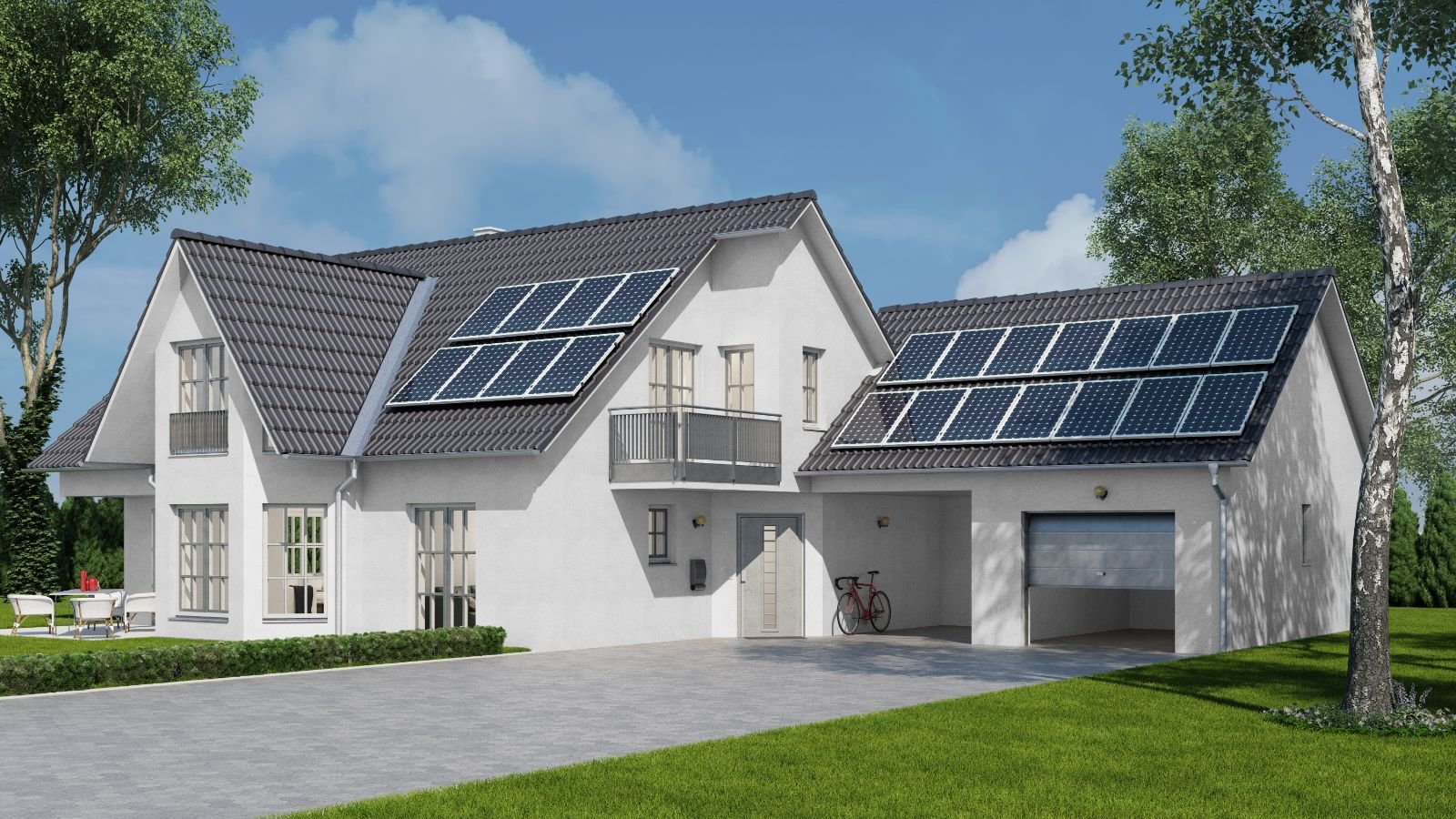
Dayton’s inner-ring suburbs have a lot of 1950s and 1960s ranches and two-stories with long, simple roofs, which suit solar well if the shingles have life left. Replace the roof first? →
Why Ohio rates keep climbing
Ohio utilities buy the power for their standard offer through PJM, the regional grid operator. PJM’s capacity auction cleared at a record price for 2025/26 and at its new price cap for 2026/27, and that cost passes through to AES Ohio customers. Transmission riders added more in 2026. None of it is something AES Ohio decides on its own, and none of it is likely to reverse soon.
Solar changes the arithmetic because it fixes part of your cost. A power purchase agreement in Dayton means no upfront payment: a licensed partner installs and owns the system, you buy the power it produces at a set rate, and you keep buying the rest from AES Ohio as normal.
How Ohio credits the power you send back
Ohio net metering credits exported power at the energy (generation) part of your utility’s standard offer, not the full retail rate, and the credit carries forward on your bill. That makes Ohio a use-it-yourself state: the power your panels make is worth the most when your home uses it as it is produced. That is why we size Ohio systems to your actual usage rather than oversizing, and why a battery that stores midday solar for the evening earns more here than in a full-retail state. How Ohio net metering works →
Energy community status in Montgomery County
Montgomery County qualifies only in part on Baker Tilly’s 2026–27 IRA energy-community map: a set of tracts tied to closed coal plants qualifies, while most of the county does not. For a lease or PPA in a qualifying tract, that can add a bonus to the federal credit the system owner claims. We check it by address.
What solar costs in Dayton
There is no single answer, and any site giving you one without seeing your roof is guessing. What decides it is your usage, your roof’s orientation, shading and condition, and the 19.5¢ rate you pay AES Ohio today. If your roof does not work, we say so on the first call rather than after you sign.
The federal residential purchase credit ended for systems bought after December 31, 2025, and Ohio has no state solar tax credit. What carries the economics in Ohio is the rate you avoid buying from your utility. For a lease or PPA, the commercial clean-energy credit stays with the system owner, which is what makes $0 down possible.
Common questions from Dayton homeowners
Who is my electric utility in Dayton?
Most of Montgomery County, including Dayton, Kettering, Huber Heights, Centerville and Miamisburg, is AES Ohio territory, as is much of Greene and Miami counties. Your bill names your utility at the top; if it does not match, call us at (832) 263-8055 and we will check your address against the service map.
Does solar still make sense now that the federal credit ended?
For a lease or PPA, yes — the credit belongs to the system owner, not you, and that is what makes $0 down possible. For a purchase, the math changed in 2026 and we will show you the honest version.
What happens if I sell my house?
A lease or PPA transfers to the buyer. The new owner takes over the same rate, and the paperwork is handled for you.
How long does an install take in Dayton?
Installation is typically one to three days. Permits with your city or township and interconnection with AES Ohio take longer, and both are handled for you.
Going solar in Dayton: your options
Two ways to pay, an optional battery, and a licensed installation partner in your area — you’re told who before anything is scheduled. How $0-down solar works →
Ohio solar guides
Planning solar in Dayton
Ohio rewards using your own solar, so start with what you use and what you would keep on in an outage.
Receive a quote from SolarAmerica today
Solar in Dayton — Frequently Asked Questions
Is solar worth it in Dayton?
For most Dayton homeowners with a suitable roof, yes. At about 19.5¢ per kilowatt-hour all-in from AES Ohio, every kilowatt-hour your panels produce is one you stop buying at that price, and $0-down lease and PPA options let qualified homeowners start without an upfront payment. Savings depend on your roof and usage, so the estimate is built from your own bill.
Can I get solar with $0 down in Dayton?
Yes. Qualified Dayton homeowners can go solar through a $0-down lease or PPA, where a licensed partner installs and owns the system and you pay for the power it produces.
Can I add a battery in Dayton?
Yes. A battery stores midday solar for the evening and keeps essential circuits running when the grid goes down. Use the battery planner on our battery backup page to see how many hours your must-have loads would run.